Friendship with a dead sculptor…(ii)

We were walking along the edge of the ocean’s foam apron, water chasing our bare feet. Seaweed piled up in little pyramids on the sand, oozing sulfurous vapor that bit into the fresh air. With his big hands this hirsute man spoke as he gestured towards the skyline, saying that it is here in nature that he finds his savage muse.

In sculpture if you become too academic in poses and style, you are making an absentee of nature and thus life becomes absent from your work. We must unfreeze sculpture, life is the thing, everything is in it, and life is movement.

You should be at the order of Nature. A sculptor should take from life the movements that he observes but he should not impose them. Obey nature and do not command her and know that there is no recipe to improve nature, for it will become a lie. The secret is to ‘see’ her and not to just look at her.

The wind picked up and carried his words away but did not hinder his monologue.

What we commonly call ‘ugliness’ in nature can become full of great beauty in art. For the great artist everything in nature has character and that which has character is beautiful. That which is considered ‘ugly’ in nature in fact has more character for its inner truth shines through more so than that which we consider ‘beautiful’ in nature. Capturing this power of character in art makes the sculpture strong with value. There is nothing ugly in art except that which is without character, that lacks inner truth. That is why Baudelaire could make the festering corpse about love, why Velasquez could render the dwarf so touching.

As we stood under the shade of the palm trees he looked up and said that he is the confidant of these trees and this ocean;  they talk to him like old friends. But his eyes now caressed the golden bodies of the sunbathers embedded in the sand; their limbs oiled and stretched to harvest every single ray of light.

Do you see their living detail?

Somehow through the years I have stopped paying attention to the loud tourist but with new eyes I scanned their bodies. The surface of their skin’s slight projections and depressions, the body itself a multitude of almost imperceptible roughness. Every body curved into an attitude, a story.


*Grunfeld V. Frederic, “Rodin. A Biography” Henry Holt. 1987.
*Rodin, A “Rodin on Art and Artists” Dover Publications. 1983.
By |2017-07-12T13:05:39-04:00June 8th, 2011|

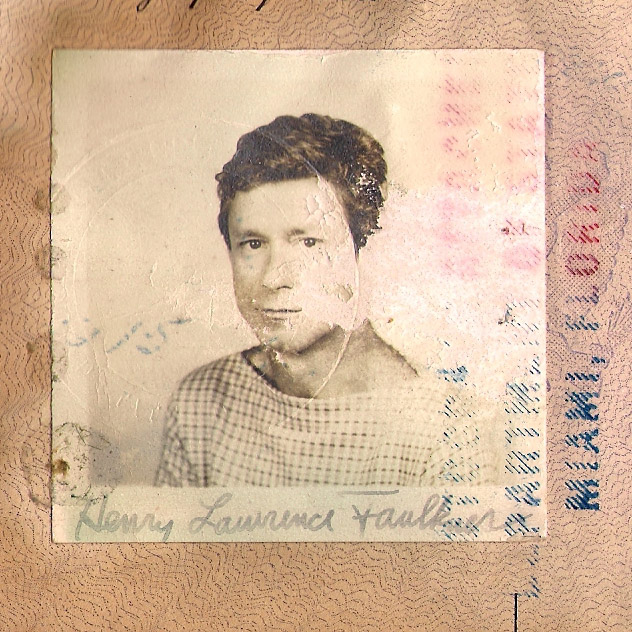
“Poetry is the bread of Children” by Henry Faulkner

Henry Faulkner

Henry Faulkner (1961)

Oh, and do you know the bread that poetry is?
The truth that is in a leaf;
that the tongue of God is in the bells of Sunday mornings.
and that Sunday is the smile of God.
That spring rains are full of sunny music.
The sun is the hair of God falling on the land.
Did you know that God was once creating children?
That He made a beautiful mistake
and called it honeysuckle…

Oh, and in the rivers that run down
under the Sundays of your sorrows
the dinner bells of happiness are drowned.
Somewhere children are hungry and in need of hope
and the winds of sorrow are crying along the corners
in their sorry tombstone-grey neighborhoods
the grass is only mocking, what might have been
but as tho’ they were eating some strange bread
The children of sorrow smile…
As tho’ smelling an apple’s strange sweet air.
They lift their heads and smile like morning
breaking through, because they now the taste
of the apples of goodness.

Oh, and children know, no matter how rich or how poor,
sad or happy, children know.
The taste of the bread of poetry.

~Henry Lawrence Faulkner (1924-1984)

Related article: Living in the Henry Faulkner House

By |2017-05-02T13:04:06-04:00June 8th, 2011|

Friendship with a dead sculptor…(i)


The Royal Poincianas are in full, blazing crimson bloom and, as I peer over my chipped porcelain teacup inhaling its dark aroma, the conversation starts.


It is a monologue that drifts over the static channels of more than a century but when he speaks his beard moves like a stiff, red, thatch roof. Barely two inches taller than me, we look at each other through a fog–not because of the curtain of time–but because of our weak eyes. Our sight is due to the unavoidable curse of a sculptor that works many hours transfixed and bent over his material in low light.


His hands–once called une main d’une prodigieuse vitesse–are moving restlessly when he speaks about how the power of observation should always be practiced…look at an object and fix that image in your mind and try to retain its memory as long as possible before you sketch it. When you are carving your object, never see the form in length but that of its width; a surface is always the extremity of the volume. He will lean forward in his chair to make very clear his point that it is all about the projection of the interior volumes. In each swelling of the torso or the limbs a suggestion of outward thrust is made by a muscle or a bone that is buried deep under the skin. Oh, and for god sakes do not brood over your failures too long for there is not much time; an intense nervous excitement should always drive you back into the studio and into your work but there is no need to hurry.


Wait a minute–what do you mean? I have to work with nervous excitement and fast hands; or there’s no hurry, so take it easy? Which one is it?


His fingers are now rolling a clay coil absentmindedly and he slowly utters that, a sculptor should be wild about working, getting up early, sketching non-stop, studying the masters, never be distracted for so much as a minute! But you always have time to make a beginning once you are sure of your subject; a sculptor can establish his or her reputation with a single piece of sculpture.


A silence falls between us that becomes filled with the songs of the cicadas, both lost in thought. I asked him if he will come back tomorrow?


*Grunfeld V. Frederic, “Rodin. A Biography” Henry Holt. 1987.
*Rodin, A “Rodin on Art and Artists” Dover Publications. 1983.
By |2017-07-12T13:05:40-04:00May 27th, 2011|

The Educators: Conversations between books.

Robert Henri said that you get two kinds of people the student and the non-student. Being a perpetual student I picked two teachers that taught me how to be aware of the weak characteristics of being an artist :

*Celaya, Enrique Martinez “The Blog. Bad Time for Poetry.” Whale & Star. 2009
*Henri, Robert, “The Art Spirit.” First Icon. 1984.

CAVEAT FOR THE SINS OF THE ARTIST:

DOUBT~
Robert Henri :”Be sure that your decisions are really made by yourself. Decisions made by yourself may be of a nature very unexpected. In other words, very few people know what they want, very few people know what they think. Many think and do not know it and many thinking they are thinking and are not thinking.”(Henri, pg 213)
Enrique Martinez Celaya:”Art, like life, depends in part on desperate passion and faith amid unshakable doubts. A leap of faith must not only be taken despite doubts but in fact depends on those doubts. There is no leap without doubts.” (Celaya, pg 112)

SUPERFICIAL~
RH:”There are painters who paint pictures with spiritual titles but whose motives are purely materialistic…We have seen superficial painters rise, have a storm of approval, and then disappear from notice.”(Henri pg 95)
EMC:”Some of us feel like hypocrites when we call for ambition of spirit and authenticity in the work of art, knowing we don’t ask for the same in our own lives. And we learn to accept trivial and cowardly gestures as significant and brave because in them we sense our own failings.” (Celaya, pg 94)

ARROGANCE~
RH:”I once met a man who told me that I always had an exaggerated idea of things. He said, “Look at me , I am never excited.” I looked at him and he was not exciting. For once I did not over-appreciate.” (Henri, pg 102)
EMC:”…I have been circumnavigating my discomfort with the whininess, arrogance and fraud that has so pervasively invaded our lives. Many of us have a ready justification for why we are less than we could be and a ways to look at things that makes us think we are really more than what we have become.” (Celaya, pg 127)

EXCUSES~
RH:”It is necessary to work very continuously and valiantly, and never apologetically. In fact , to be ever on the job so that we may find ourselves there, brush in hand, when the great moment does arrive.”(Robert, pg 93)
EMC:”All artists should assume they have – at best- a tiny talent, and this reality doesn’t have to be entirely sad. If you are doing better work today than two years ago then things are looking up. Stop treading water. Stop diffusing your sadness. Stop being small. Get rid of your excuses” (Celaya, pg 147)

LAZINESS~
RH:”Like to do your work as much as a dog likes to gnaw a bone and go at it with equal interest and exclusion of everything else. (Robert pg 167) ” Be a warhorse for work, and enjoy even the struggle against defeat. Keep painting, it’s the best thing in the world to do.” (Robert, pg 232)
EMC:”But what do people do with their time if they are not working towards the fulfillment of their humanity? Day to day, they are watching television, dabbling at their work, talking on the phone, feeling sorry for themselves, taking it easy, wasting time. In the long run, they are busy fabricating the lie of why they are not who they could have been.” (Celaya, pg 152)

HYPOCRISY~
RH:” It is a question of saying the thing that a person has to say. A man should not care whether the thing he wishes to express is art or not, whether it is a picture or not, he should only care that it is a statement of what is worthy to put into permanent expression.” (Robert, pg 137)
EMC:”In contrast to the perspective offered by distance, our daily living favors the immediate and the fashionable, and sometimes persuaded by that immediacy as well as by cultural repetition and the desire to seem informed, people praise the artistic merit of dubious artworks, and moral flexibility and status anxiety encourage these colorful evaluations.”(Celaya, pg 93)

DECEIT~
RH:”Today man stands in his own way. He puts a criterion in the way of his own revelation and development. He would be better than he is and because man judges poorly he fails to become as good as he might be. He should take his restraining hand off himself, should defy fashion and let himself be. ..The works of the masters are what they are because they are evidences from men who dare to be like themselves.” (Robert, pg 187)
EMC:” At times, the need for clarity and precision requires terms and methods that might not be familiar to everyone. But arcane notions ought to be tools in the search for truths rather than veils to hide lies. It is more productive to study great thinkers to understand the mechanism of their thought than to find a quotable phrase or a hook for one’s deficiencies: even minor understanding of a good mind brings forth humility. The temptation is always there to firm our soft understanding with the prop of the big word or the important framework, but these affectations tend to hide truths not only from others but from ourselves as well.” (Celaya, pg 57)

By |2017-07-12T13:05:40-04:00May 20th, 2011|

The Birthright

His words always fit my heart and soul like a glove, his books “an axe to chop open the frozen sea inside“.

“…our presence there was legal but illegitimate. We had an abstract right to be there, a birthright, but the basis of that right was fraudulent. Our presence was grounded in a crime, namely colonial conquest, perpetuated by apartheid. Whatever the opposite is of native or rooted, that was what we felt ourselves to be. We thought of ourselves as sojourners, temporary residents, and to that extent without a home, without a homeland.” ~J.M Coetzee

Summertime,  2009,  Penguin books, 209-210

By |2017-07-12T13:05:40-04:00May 6th, 2011|
Go to Top