Homage

From Notebook : 2009 Japan

“Whole and unity; thing or entity or being. Every whole is a unity and every unity that is divisible is a whole. … Every unity is something and not nothing. Any unity is a thing or an entity or a being. Objects and concepts are unities and beings.” ~ Kurt Gödel

Concepts and thoughts are self-referential. An incestuous repetitive cycle. It becomes an inversion of the original thought and loses itself in interpretations, to boldly arrive at the same concept again. My thoughts are trekking with a mission to discover the unknown and soon I realize that instead it is following an unknown individual; when tapped on the shoulder, it is me that turns around. A variety of experiments revealed the peculiar phenomenon of the blindfolded human asked to walk from point A to point B. He cannot walk in a straight line. His path will slowly curve and curl and at times finds himself back where he has started.

In the East you will find this similar concept in the symbol of Ensō – the incomplete circle – a symbol that through its simplicity reminds us that our ideas are perpetually incomplete.
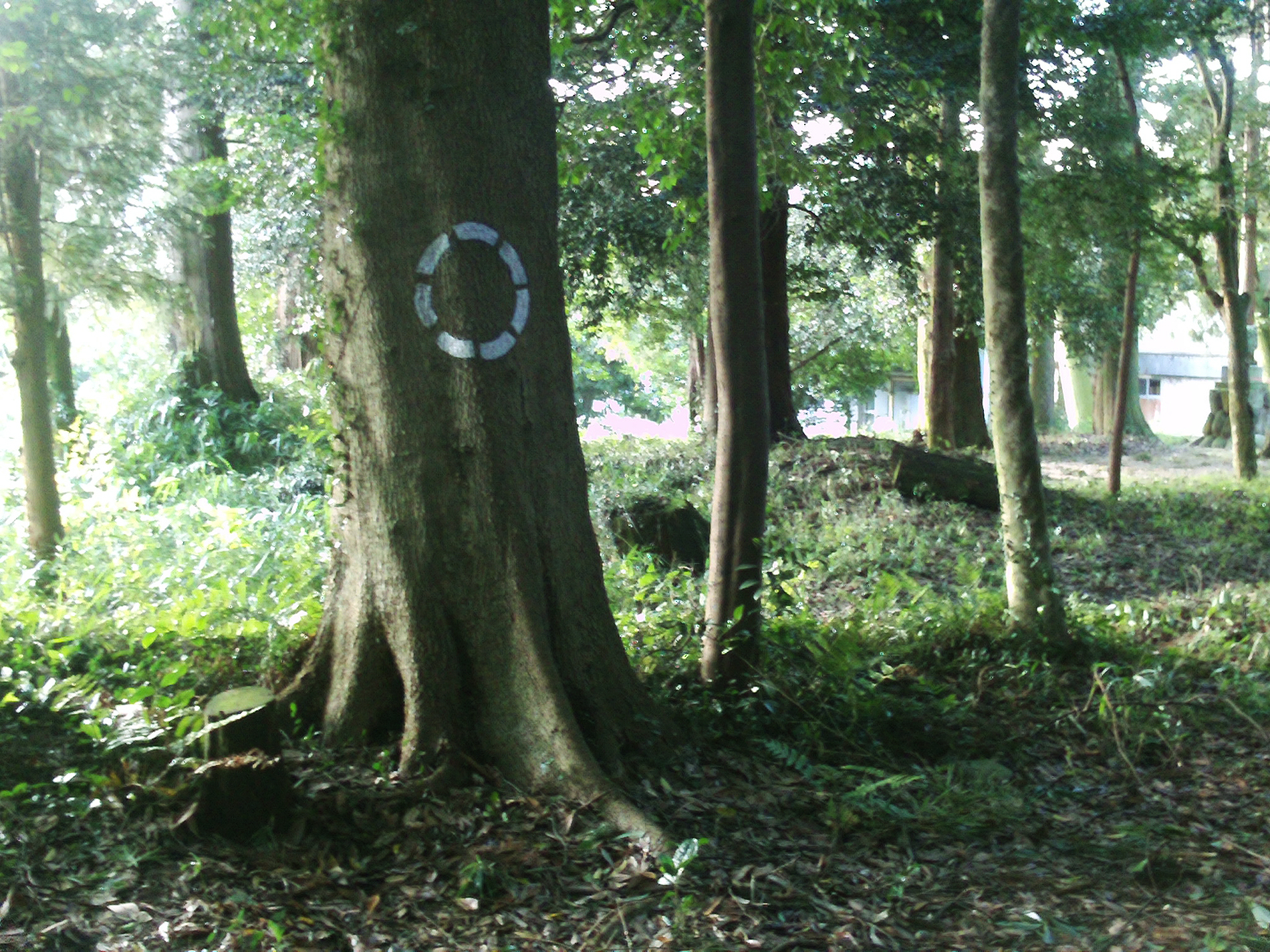
Nature drawing in Japan by Anja Marais

“Full Moon in Japan” by Anja Marais ©2009
By |2017-05-02T13:04:08-04:00February 16th, 2011|

The Explorer.

Notebook Entry: 2010 Sweden

Who knows better than the explorer about the pull between home and the call of the trail, to be suspended between saudades (the pathos of things) and the lust of the unknown. We might have run out of finding the untouched and the new. The antique idea of the explorer who covers the arctic or crosses monstrous oceans now read as fables. Yet every man is still an explorer of his own deep psyche and the quest for truth.

The noble explorer Fridtjof Nansen explained it in the following manner:

“We all have a Land of Beyond to seek in our life—what more can we ask? Our part is to find the trail that leads to it. A long trail, a hard trail, maybe; but the call comes to us, and we have to go. Rooted deep in the nature of every one of us is the spirit of adventure, the call of the wild—vibrating under all our actions, making life deeper and higher and nobler.”

To be an explorer means moving through the worst conditions and the roughest of terrains, where your only limitations are provided by nature and your inner dialogue.

“Sometimes I delude myself of charming dreams of my return home after toil and victory, and then all is clear and bright. Then these are succeeded by thoughts of the uncertainty and deceptiveness of the future and what may be lurking in it, and my dreams fade away like the northern lights, pale and colorless” . .. Fridtjof Nansen

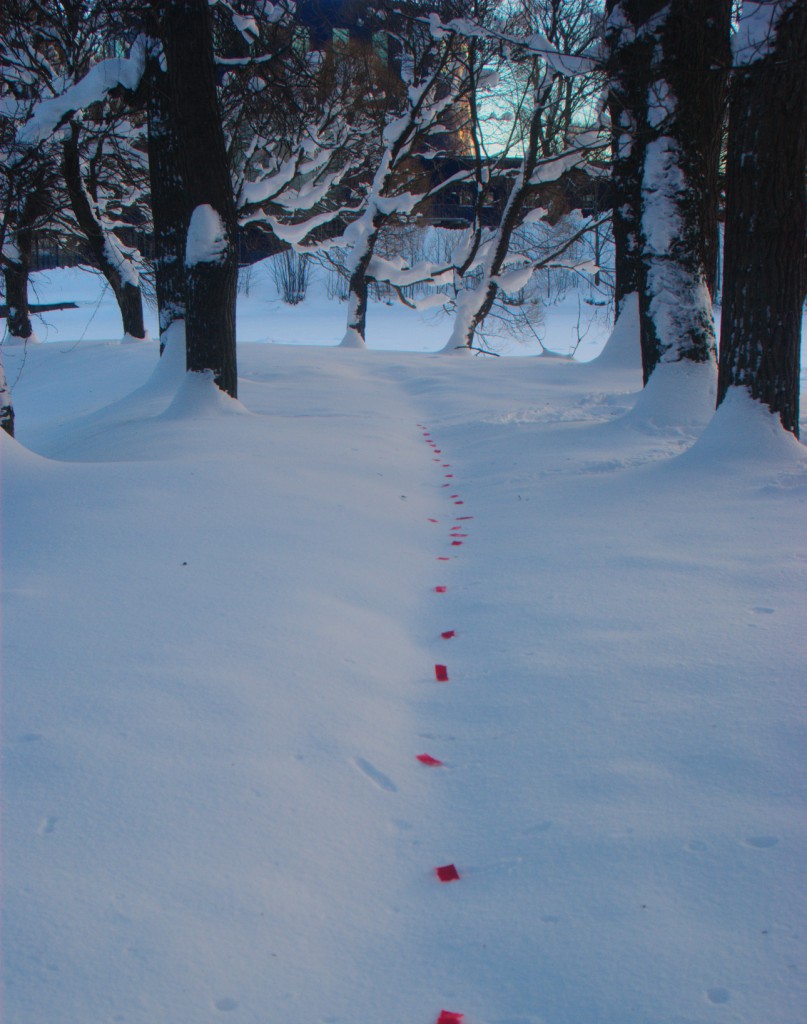
Swedish trails © 2011 Anja Marais


By |2017-07-12T13:05:40-04:00January 10th, 2011|

Flight of the Crane

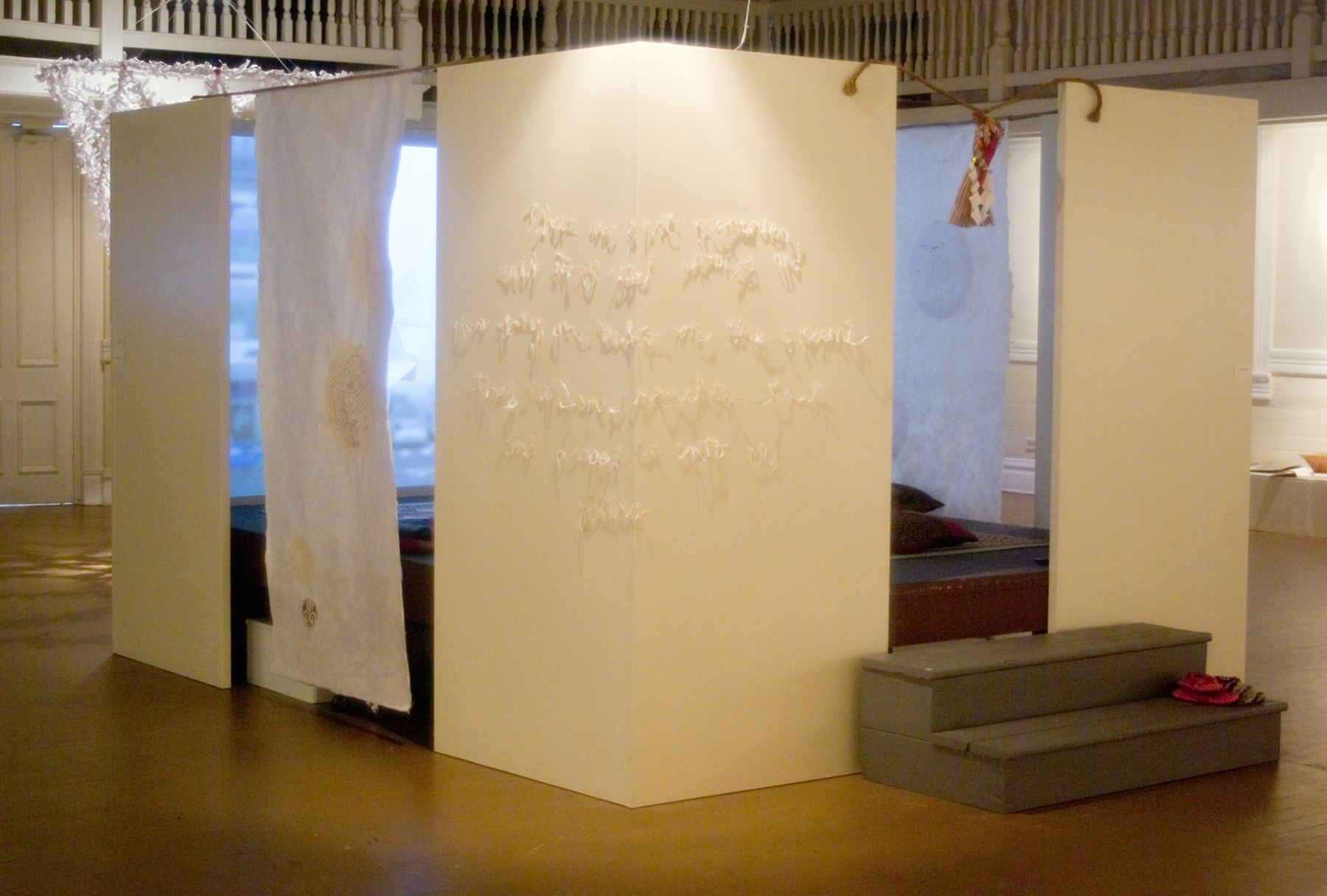
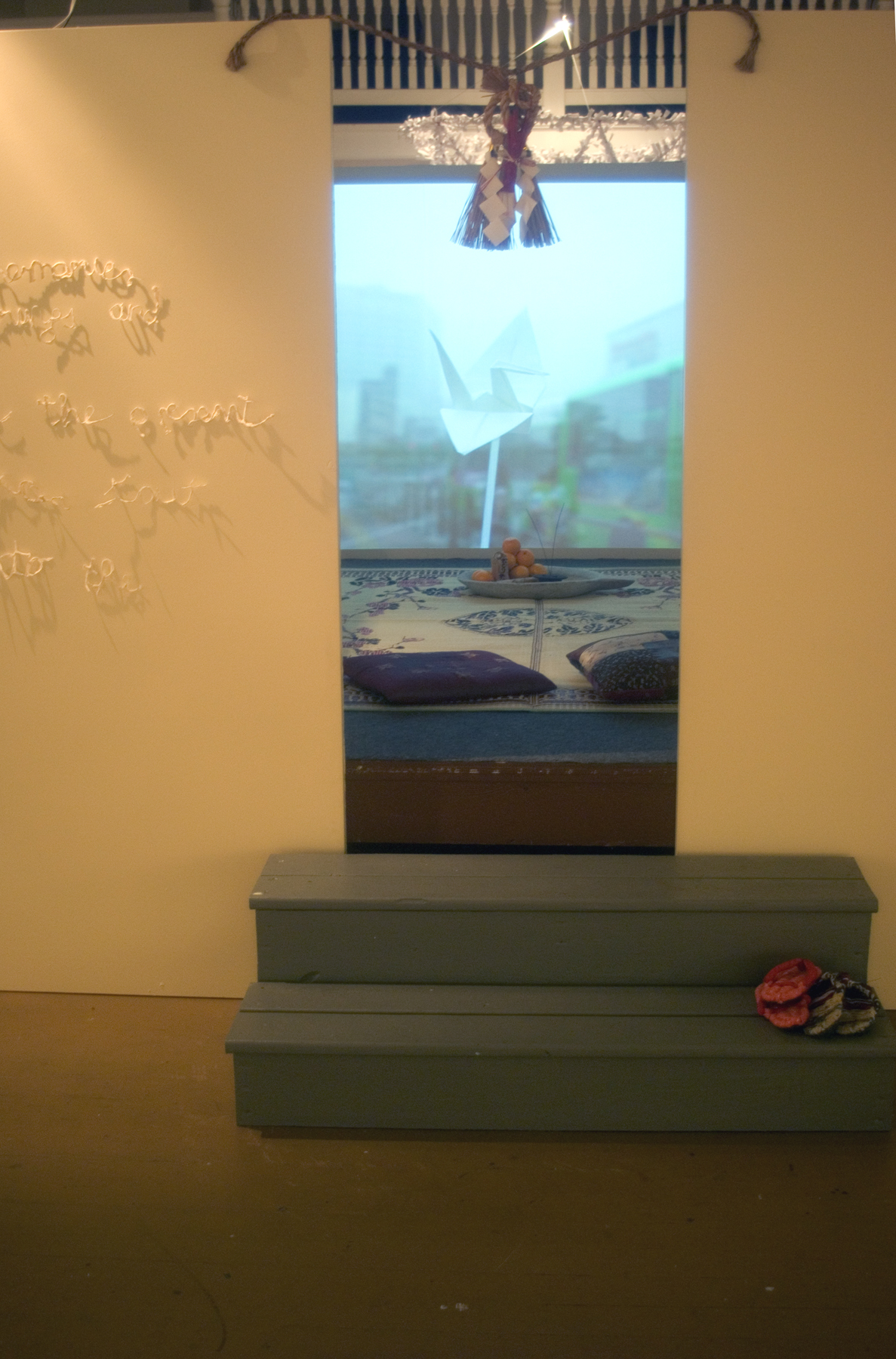
Video installation that can be seen at TSKW for the solo exhibition “Conversations of Kami” until December 30th, 2010.

Video installation, "Flight of the crane"

I realized one of the qualities of being an artist is our peculiar nature of seeking out situations of discomfort. This is the opposite direction of our human software, to seek security and safety. The artist can approach what he wants and what he needs in a different way so that more creativity can be generated. Something happens to your senses and perspective when you are outside of your comfort zone. Discomfort can be either mental in the form of self-doubt, not trusting your arsenal of choices or it can be physical in the form of awe, pain, obstacles, being threatened or alienation from your direct environment. Either way both mental and physical discomfort can lead to growth on a creative level. Brilliant drummer Greg Saunier (Deerhoof) would place obstacles in his own way to make sure he is never to comfortable behind his drum set, he would even take parts of his drums away forcing him to think differently in coming up with the same sound in new ways. He explains it in his own words here.

I purposely were interested in attending residencies in the far east for just this reason. Being dropped by yourself in the middle of a new culture were you do not know or cannot read the language and do not understand the customs, food or manners. You automatically switch to survival mode. Survival mode for me is a form of “fight and flight”, all my senses are heightened, I see, smell and hear differently. I even process information differently since my logic is shaped by my culture, and suddenly it do not apply. It is a senses overload and best of all your resistance is lowered. You first need all the new information in before you can process it. When you are in a comfort zone you already have your information and had made up your mind.

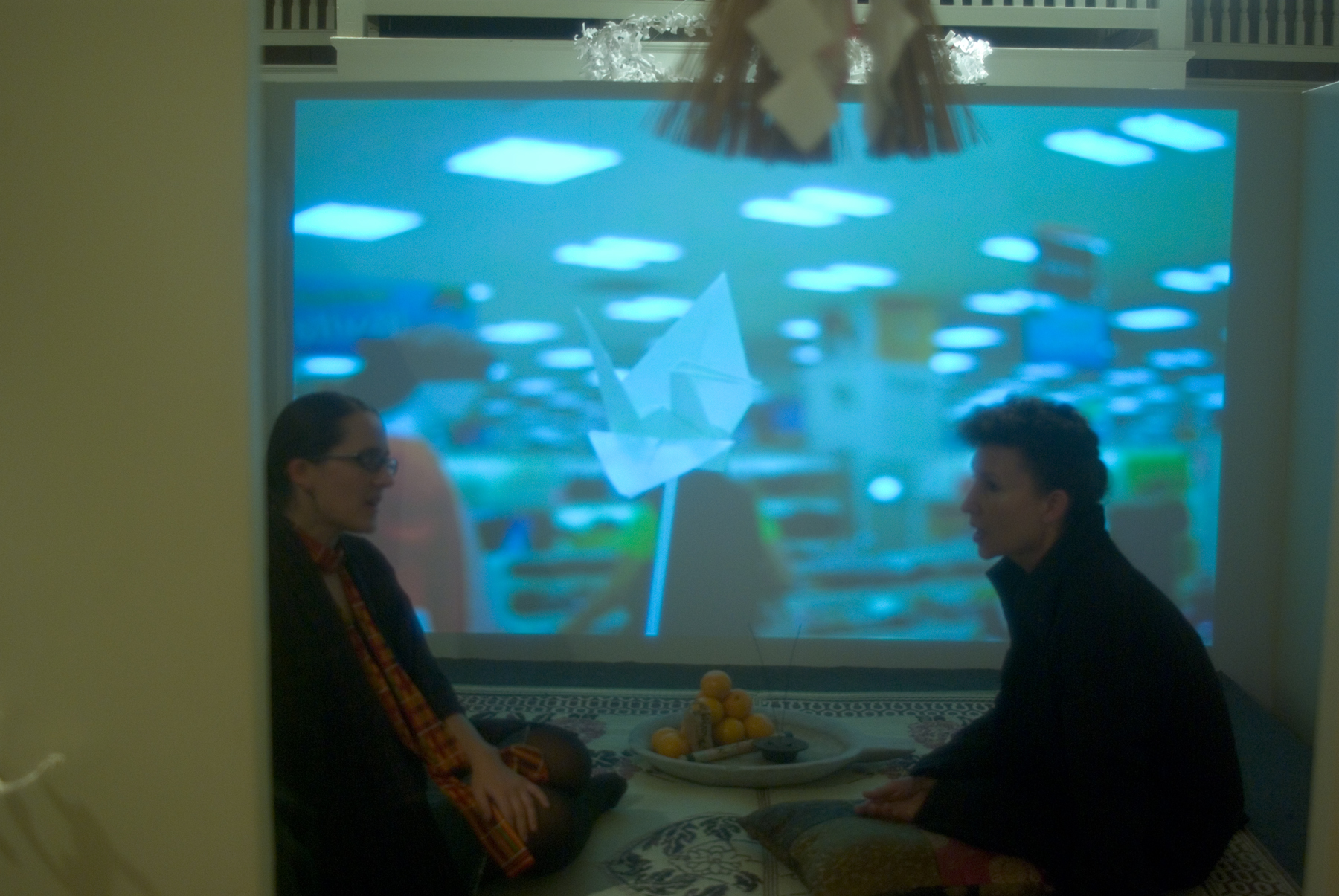
This video/stop animation was shot in Seoul, Korea based on a Japanese fable of a man who devoted his life constantly seeking his lost wife(also a crane) after his betrayal of her trust.

Extract from Video Installation. "Flight of the Crane"

It dawned on me that this is another reason I am so interested in working with the idea of the ‘perpetual out-lander’. To always be in a state of discomfort and to never reach a full conclusion, this helps me to see the world in a new and different light in every step I take. The great artist Enrique Martinez Celaya once said at a workshop that I attended that an artist should be in constant discomfort so that he/she can overcome their own weaknesses.
______________________________________________________________________
Flight of the Crane Video was:

By |2017-05-02T13:04:08-04:00December 15th, 2010|

From ‘Studio Decisive Moments’

A Review by student Chrissy B. from the blog ‘Studio Decisive Moments’ of ” Tenterhooks” an exhibition by Karley Klopfenstein and Anja Marais at St. Mary’s School of Maryland’s Boyden Gallery.

“….The dual exhibition showcased the work of Anja Marais who is an artist from South Africa who works with sculpture and the theme of storytelling and life passages in her work. Although she currently resides and works in Florida, Marais has artwork and publications all over the country. As her biography states, “ Through an ancestral portal she examines the fragility of life by creating biosphere content that touches on themes of cyclical elements of fauna and flora, memories, genetics and life-death.” This is very true with Marais’ work that she presented in the exhibition, with sculptures of the human head and torso attached to strings and other fabric materials. One specific sculpture showed a man’s head upside down, attached at the neck by a tied rope hung off the ceiling. The sculpture is hand sewn and Marais explained how she sews on each small portion of fabric to make the surface of the sculpture actually resemble that of the human skin. This, as well as glass eyes bought from a taxidermist make the sculpture resemble the human forms of life and death; it’s on the edge of reality but also on the verge of unreal. When I spoke to Marais, she actually said that this was something she was trying to get across in her artwork. Behind this particular piece was a collage of the different pieces of numbered fabric, pasted onto a sheer cloth with hints of blue water-like shapes. When you stand back and look at the work, it looks like a person submerging themselves into the water; its abstraction and beauty really do contradict each other, but give it almost a sort of nostalgic feeling. …” ~ Chrissy B

By |2017-07-11T00:09:17-04:00November 25th, 2010|

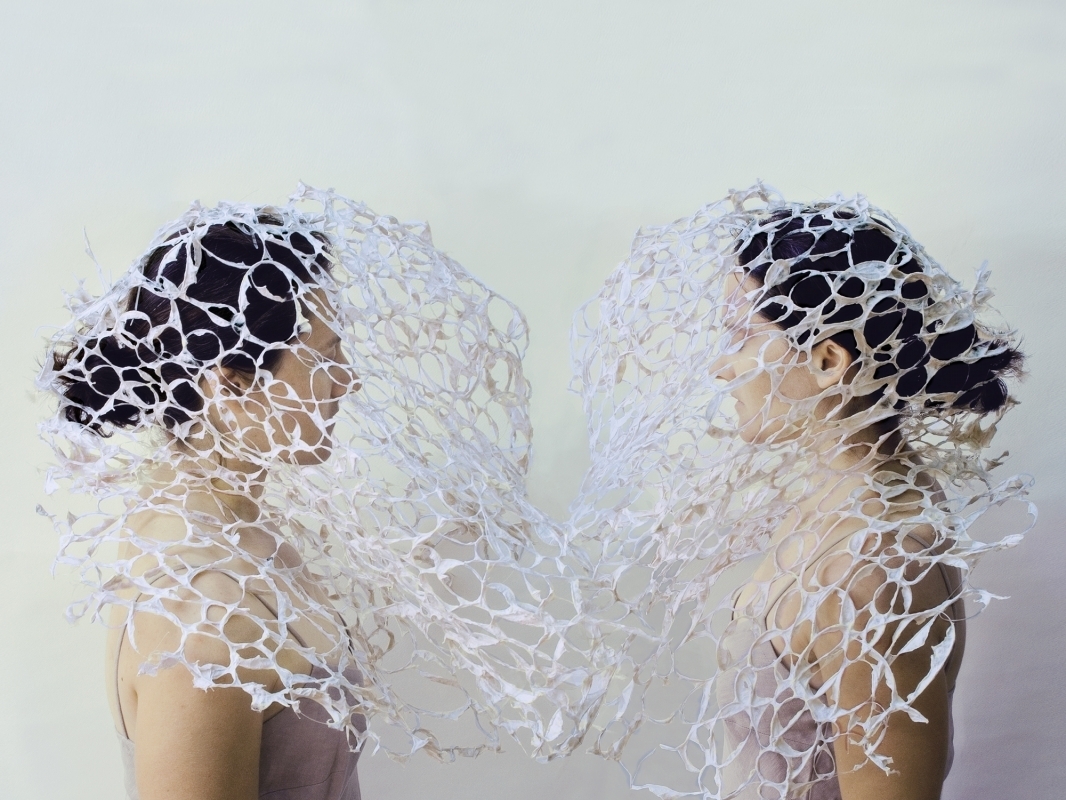
Ouroboros Series: Simplifying complexity.

Anja Marais Artist

Ouroboros. 2011- 20×30. Inkprint on linen paper.

…..two shadows live in my suitcase, they do not like to travel by air….that is when i understood that i am only a speck of dust, yet this dust comes from the stars……

By |2017-05-02T13:06:37-04:00July 21st, 2010|
Go to Top